


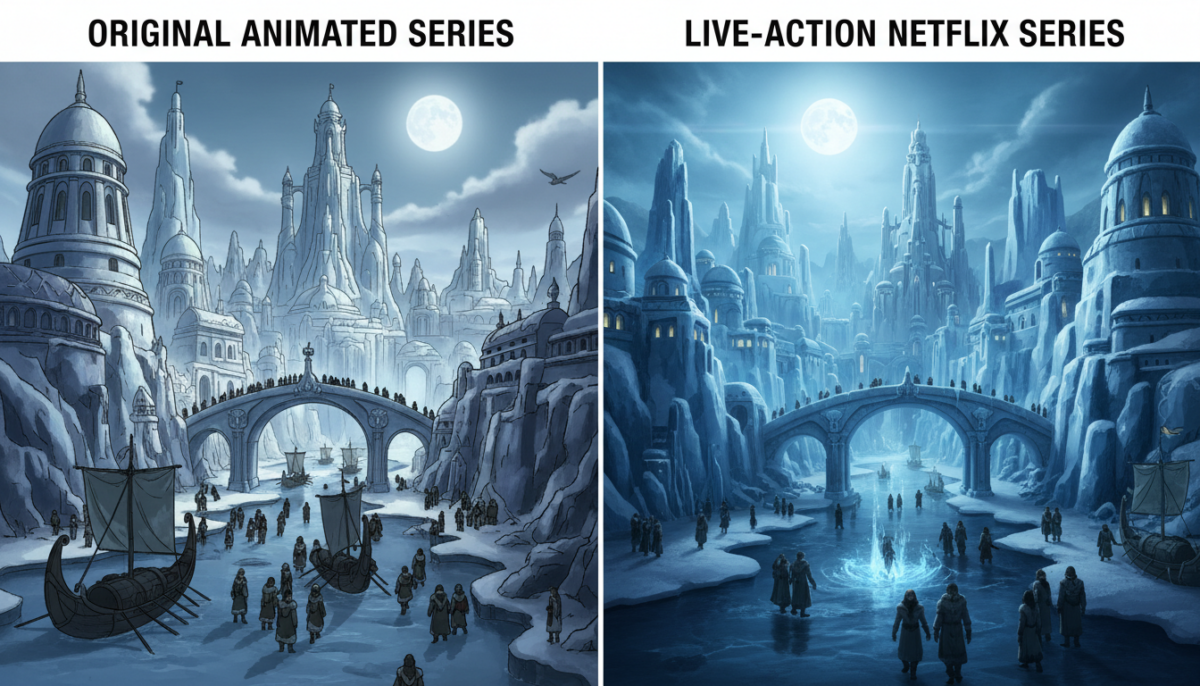
Netflix’s Avatar: The Last Airbender live-action faithfully captures the core storyline and elemental spirit of the original, while introducing its own tone, pacing, and character tweaks. It delivers strong visuals and refreshing performances but sometimes feels rushed and lacks the emotional richness and camaraderie that made the animated series so beloved.
Why the Live-Action Still Resonates
The live-action adaptation soared in popularity from day one. Within its opening four days, it amassed roughly 21.2 million views globally, outpacing One Piece by around 15 percent. In the U.S., it clocked nearly 2.6 billion minutes watched—double what One Piece achieved in the same span. Netflix even renewed it for two more seasons to complete Aang’s journey.
Strengths of the Live-Action
- Spectacular worldbuilding and visual effects—especially for fire and earth bending—give the adaptation a cinematic flair.
- Casting choices, including Gordon Cormier as Aang and Dallas Liu as Zuko, were widely praised.
- Reviewers noted the improvement over the 2010 film adaptation, particularly avoiding those former pitfalls.
“My aim was to become a real-life version of Zuko—emphasizing the nuances the cartoon couldn’t fully explore.”
— Dallas Liu, on interpreting Zuko’s arc
What Feels Off Compared to the Animated Classic
Pacing & Depth
The animated series spread Book One: Water across 20 episodes, allowing room for humor, friendship-building, and world exploration. The Netflix version condenses that into eight episodes, leading to rushed worldbuilding and lost emotional beats.
Tone & Atmosphere
The original balanced weighty themes—war, genocide, cultural identity—with warmth and levity. The live-action leans darker and more brutal, which some found jarring or mismatched.
Character & Plot Changes
Several alterations stand out:
- Sozin’s Comet, a looming threat in the original, is barely mentioned—likely postponed due to practical cast aging concerns.
- Jet, the Mechanist, and others are reshuffled to appear in Omashu together, merging multiple arcs into one.
- Azula appears earlier in the live-action, giving her more presence and foreshadowing.
- Katara learns waterbending alone, shifting away from the shared learning dynamic with Aang.
- Suki’s mother replaces the male leader of Kyoshi Island, adding emotional depth to Suki’s backstory.
- Aang’s connection with Gyatso is more emotionally foregrounded, including spirit-world reunions absent in the original.
Though fans long for Appa’s playful bonding or subtle humor, the live-action cuts those in favor of a more streamlined, action-focused narrative.
Reception: Divided but Hopeful
Critical Scorecard
- Rotten Tomatoes: ~62% approval for Season 1, with average 6.0/10.
- Metacritic: Around 55/100, signaling mixed reception.
- Critics offered both praise for scenery and criticism for pacing and emotional disconnect.
Fans’ Take
- Many appreciated it as the best adaptation to date—vastly better than the 2010 film.
- Others found themselves comparing it too closely to the original, dampening their experience.
What the Future Holds
- Netflix confirmed the show will conclude over two additional seasons, aligning with the original trilogy format.
- A new animated spinoff, Avatar: Seven Havens, is slated for 2027 on Paramount+, with original creators returning and sparking renewed fan excitement.
Conclusion: A Bold Reimagining That Still Needs Heart
Netflix’s Avatar: The Last Airbender delivers bold visuals, compelling performances, and strong initial viewer engagement. It pays homage to the animated storyline while putting its own structural and tonal stamp on it. Yet, the emotional core and charm are not always fully realized due to pacing and stylistic shifts. The series shows promise—and with two more seasons to come—the hope is it will deepen character bonds and recapture more of what fans adored in the original.
FAQs
Did the live-action follow the animated plot exactly?
Not exactly. It streamlines the story, merges arcs, shifts timelines, and omits certain cues (like Sozin’s Comet), while adding new dynamics such as Azula’s early introduction and Katara’s solo bending journey.
Why did the original creators leave the live-action?
Michael DiMartino and Bryan Konietzko departed before production due to creative differences with Netflix, leading to changes in tone and story approach that concerned some fans.
Is the live-action better than the 2010 film?
Yes. Nearly all reviews agree it’s a marked improvement over M. Night Shyamalan’s film, with better casting, visual effects, and respect for the source material.
Will Netflix finish the animated storyline?
Yes. Netflix greenlit seasons two and three to conclude the original animated saga, giving the series a complete arc.
Is the animated series still available to watch?
Absolutely. Both the original Avatar: The Last Airbender and The Legend of Korra are streaming on Netflix alongside the live-action series.


